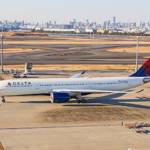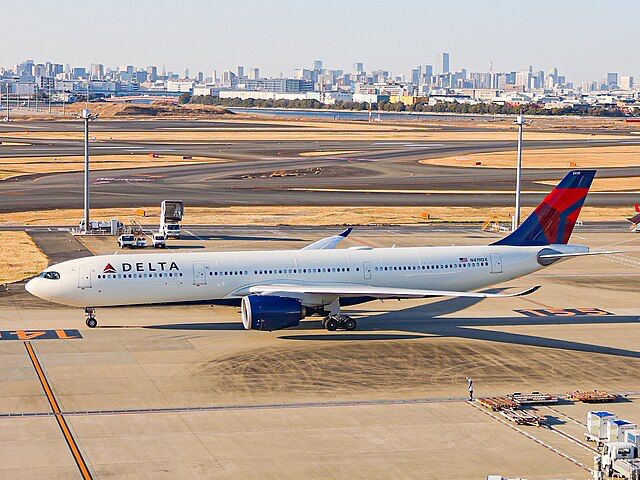
Air travel is designed to operate with redundancy and safety margins, but sometimes even routine long‑haul flights face extraordinary circumstances. On 2 February 2026, Delta Air Lines flight 234 from New York’s JFK Airport to Tel Aviv diverted to Dublin after a serious medical emergency on board. While there were no fatalities or injuries beyond the ill passenger, the incident made headlines because the crew broadcast a squawk 7700 (the international code for a general emergency) and performed an overweight landing in Ireland.
A transatlantic flight takes an unexpected turn
Delta flight 234 departed John F. Kennedy International Airport just before 4 p.m. Eastern on 2 February with 158 passengers bound for Ben Gurion International Airport near Tel Aviv. Roughly four hours into the ten‑hour voyage, while cruising at 36,000 ft over the North Atlantic between Ireland and the United Kingdom, a passenger suffered a medical emergency that required immediate attention. The pilots communicated with air traffic control and declared a general emergency by entering transponder code 7700. According to the California Aeronautical University, squawking 7700 informs controllers that the aircraft requires priority handling due to an unspecific emergency, whether mechanical or medical. Since the nearest suitable diversion airport with necessary medical facilities was Dublin, the crew altered course and began preparations for an unplanned landing.
Why Dublin?
Choosing a diversion airport involves balancing several factors: the severity of the emergency, distance to the nearest suitable airfield, runway length, weather and available medical support. The Airbus A330‑900neo operating flight 234 still had several hours of fuel on board for its long‑haul mission. That meant the aircraft would be heavier than its maximum landing weight, a condition known in aviation as an overweight landing. Dublin Airport has long runways (more than 2,600 m) and infrastructure to support wide‑body aircraft. The crew consulted with dispatchers and Delta operations and determined that the runway and emergency services at Dublin could accommodate an overweight landing.
Understanding overweight landings
Commercial aircraft are certified for a maximum landing weight (MLW) that is lower than their maximum take‑off weight (MTOW). This margin ensures that the landing gear, brakes and airframe are not overstressed when touching down. When circumstances require returning to the ground shortly after take‑off, pilots may dump fuel or hold in a pattern to burn fuel until the aircraft weight is within limits. In the case of flight 234, the medical emergency meant that time was critical; the pilots judged it safer to land overweight rather than spend additional time reducing fuel. Overweight landings require longer runway distance and precise control to avoid overheating the brakes or damaging the landing gear. After landing, maintenance crews must inspect the aircraft to verify that no structural damage occurred before it is returned to service.
The drama unfolds: crew actions and ATC coordination
AirLive and Simple Flying report that the crew broadcast squawk 7700 and requested priority to land; controllers instructed other traffic to remain clear while emergency crews at Dublin prepared for the incoming airliner. In audio captured by LiveATC.net, the pilots calmly informed controllers of the medical situation and the heavy fuel load. Meanwhile, cabin crew members administered first aid to the passenger and prepared passengers for an emergency landing. The plane touched down at 01:17 a.m. Irish time, using more runway length than usual due to the extra weight but stopping safely.
Upon arrival, paramedics met the aircraft and transported the ill passenger to hospital. Delta confirmed that no other passengers or crew were injured and that the aircraft later continued to Tel Aviv after a brief inspection, arriving only about three hours behind schedule. This rapid turnaround underscores the professionalism of flight crews, dispatchers and maintenance teams.
Why did the crew not dump fuel?
Some readers may wonder why the pilots didn’t simply dump fuel to avoid an overweight landing. Wide‑body aircraft like the A330neo are equipped with fuel‑dump systems, and pilots often use this capability when they need to return soon after take‑off. However, fuel dumping is not instantaneous; it can take many minutes to safely jettison fuel and requires coordination with air traffic control to avoid environmental impacts. In this case the flight had already been airborne for several hours, burning off part of its fuel load naturally. Simple Flying notes that the crew determined that landing overweight was within safety margins and that the urgency of the medical emergency outweighed the benefits of additional fuel‑burning time.
Lessons for passengers: stay calm and trust the crew
Flight 234’s diversion highlights several important points about aviation safety:
- Emergencies are rare but planned for – Airlines train pilots and cabin crews extensively for medical emergencies, mechanical issues and diversions. In this case the crew’s prompt response and adherence to procedures ensured a safe outcome.
- Squawk 7700 doesn’t mean doom – The general emergency code alerts controllers to prioritise the flight. It can be used for many reasons, including medical issues; hearing “Mayday” or seeing news reports of a squawk 7700 should not cause panic.
- Overweight landings are risky but manageable – Pilots avoid them when possible, but aircraft are engineered to withstand occasional overweight landings. Maintenance inspections after such events ensure airworthiness.
- Diversions may delay arrival but rarely disrupt service – After the ill passenger received treatment, the flight resumed and reached its destination only a few hours late.
Broader context: runway incursions and other incidents
The Delta diversion occurred during a week when several other aviation incidents captured headlines. Just days earlier a Southwest Airlines flight aborted take‑off at San Antonio International Airport to avoid a collision with a private plane that mistakenly entered the runway. That near‑miss was another example of flight drama resolved safely thanks to alert pilots and air traffic controllers. And on 3 February another Delta flight returned to San Antonio due to a possible engine‑fire indication; the pilots declared an emergency and landed without incident, and investigators later determined no fire had occurred. These events, though dramatic, underscore that modern air travel remains remarkably safe because of robust procedures, redundancy and professional training.
Conclusion
Delta Flight 234’s diversion to Dublin demonstrates the aviation industry’s commitment to safety and the professionalism of flight crews. Medical emergencies can occur anywhere, but on a transatlantic flight the stakes are higher because of limited diversion points and heavy fuel loads. By quickly assessing the situation, communicating with controllers and prioritising the passenger’s welfare, the pilots ensured a safe landing. Passengers should take comfort in the fact that procedures for emergencies, including overweight landings, are well practised and rarely compromise overall safety. The next time you see headlines about a flight squawking 7700 or making an emergency landing, remember that behind the drama lies a system designed to protect everyone on board.