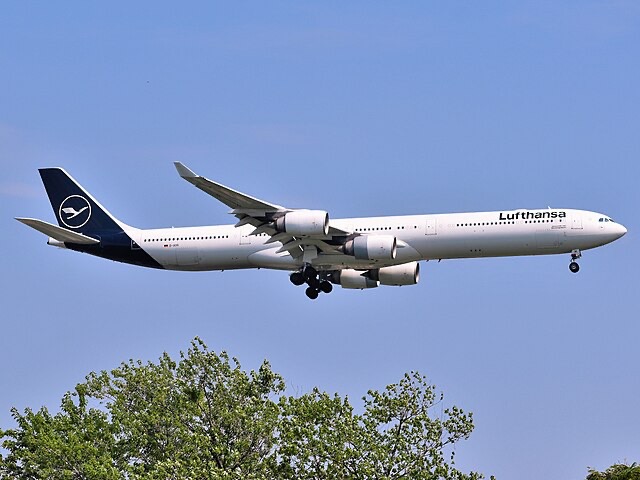
If you follow aviation even casually, the Airbus A340 feels like an aircraft from another era. It has four engines at a time when airlines are obsessed with fuel efficiency. It burns more fuel than modern long haul jets. It has been replaced, on paper at least, by newer twin engine aircraft that can fly just as far for far less cost.
And yet, the A340 has not fully gone away.
Every so often it still appears on flight schedules, charter operations, or in the fleets of governments and special mission operators. Not many. By the middle of 2025, only a few dozen A340s were still flying scheduled passenger services worldwide. But the fact that any remain at all raises an obvious question.
Why would anyone still fly one?
The Simple Answer People Expect
The usual explanation is fuel burn. The A340 lost the economic argument years ago. Four engines mean higher fuel consumption and more maintenance compared with modern twin engine aircraft like the A350 or 787. Airlines chasing efficiency moved on, and for good reason.
That explanation is true, but incomplete.
Airlines do not always make decisions based purely on fuel efficiency. They make decisions based on what problem they are trying to solve at that moment. Sometimes the biggest problem is not fuel. Sometimes it is having an aircraft available at all.
When Availability Matters More Than Efficiency
Airlines plan fleets years in advance, but reality often interferes. Aircraft deliveries slip. Engines are grounded for inspections. Older jets are retired faster than replacements arrive. When that happens, airlines face a choice.
They can cancel flights and lose revenue immediately. Or they can keep older, less efficient aircraft flying to protect capacity.
This is where the A340 has quietly survived.
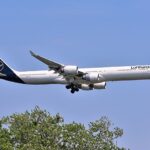
A good example is Lufthansa. The airline has been clear that the A340-600 is on the way out, with retirement targeted for 2026. But the aircraft stayed in service longer than originally planned. The reason was not nostalgia. It was timing.
Widebody replacements were arriving more slowly than expected, and long haul capacity was still needed. The A340 became a bridging aircraft. It was not ideal. It was available.
In aviation, available often beats perfect.
Cheap Aircraft Can Still Make Sense
Another factor is acquisition cost. The A340 is no longer expensive to buy or lease. For some operators, especially those starting routes quickly or covering temporary gaps, the monthly cost of operating an older aircraft can be lower than financing a new one, even if fuel costs are higher.
This logic appears most clearly in the wet lease and charter market. Hi Fly continues to operate A340-300s and markets them for long haul charters and short notice deployments. Customers using these aircraft are often solving immediate problems. They need lift now, not optimal efficiency over the next decade.
Fuel burn is a known downside. Lack of aircraft is worse.

Safety Perception Used to Matter More
To understand why the A340 ever existed, it helps to look back. When the aircraft was designed, long haul twin engine operations were more restricted and less trusted. Rules limited how far twin engine aircraft could fly from a suitable diversion airport.
Over time, that changed.
Regulators such as the Federal Aviation Administration expanded ETOPS approvals, allowing twin engine aircraft to operate safely far from diversion airports. The International Civil Aviation Organization later broadened this thinking through EDTO guidance.
As twins proved reliable, the four engine safety advantage that once helped aircraft like the A340 faded. Once that advantage disappeared, economics took over, and the A340 was exposed.
Why Governments Still Like It
While airlines moved on, some government and state operators did not. For VIP transport and special missions, priorities are different. Range, redundancy, and flexibility matter more than fuel efficiency. These aircraft fly infrequently and often on irregular routes. The cost structure is not the same as a commercial airline.
In those roles, an aircraft that is already paid for and capable of long range missions can remain useful for years.
The Bigger Picture
The A340 did not survive because it beat modern aircraft. It survived because aviation is not always about efficiency.
Sometimes airlines need capacity immediately. Sometimes they need an aircraft that can be deployed quickly. Sometimes they are working around delays, shortages, or transitions that spreadsheets do not capture well.
The A340 fills those gaps. Poorly, perhaps. Temporarily, certainly. But effectively enough to keep flying.
That is why it still appears, unexpectedly, at airports today. Not as a success story, but as a reminder that aviation decisions are often driven by reality, not ideals.