By Joshua Fagan – Last updated 10 February 2026
The Boeing 757, formerly the primary aircraft for transcontinental and trans-Atlantic “long-and-thin” routes, was discontinued in 2004 but remains prevalent at many airports. Its distinctive combination of capacity, range, and performance enabled operations on routes unsuitable for smaller jets or uneconomical for wide-body aircraft. Airlines continue to operate aging 757s or seek alternative solutions. This article examines the historical context, market dynamics, and new aircraft developments influencing the ongoing search for a true Boeing 757 replacement.
The 757’s legacy: performance that spanned continents
Introduced in 1983, the Boeing 757 was designed to replace the 727 and share a type rating with the larger 767. Powered by high‑thrust engines producing up to 43,000 lb of thrust, it offered one of the highest thrust‑to‑weight ratios of any narrowbody jet. Depending on the variant, the 757 could seat roughly 180–239 passengers and fly up to around 3,900 nautical miles. These qualities allowed airlines to operate transatlantic services from the U.S. East Coast, open “long‑thin” routes where a wide‑body would be uneconomic, and operate from short or high‑altitude runways.
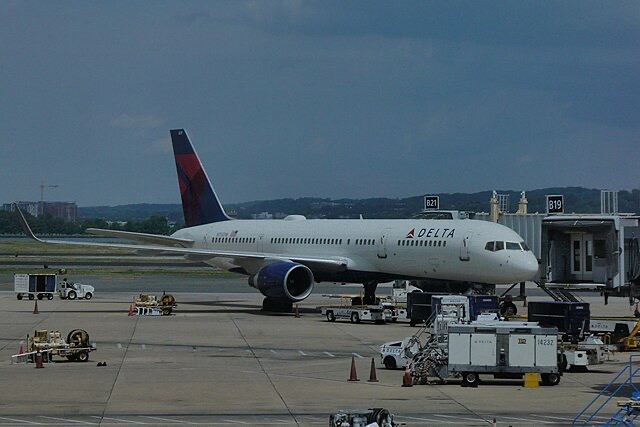
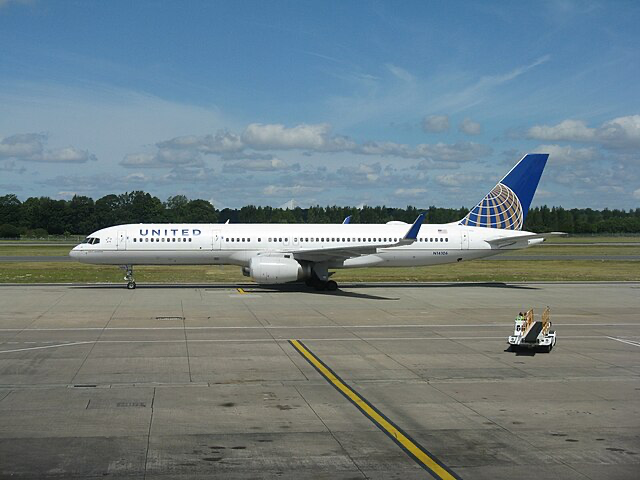
United Airlines demonstrates the 757’s appeal by operating routes such as Newark to Stockholm, Edinburgh, Porto, or Dublin, as well as domestic flights like Denver to Lihue. Delta Air Lines, which maintained over 80 active 757s in late 2025, values these aircraft for their cost-effectiveness and shared type rating with the 767. However, as the youngest passenger 757s approach 20 years of service, maintenance and fuel inefficiencies are increasing. These aging 757s can result in a 20% higher fuel burn per seat compared to newer alternatives like the A321LR, which significantly affects operational costs. In the absence of new production, airlines must choose between retaining aging 757s, converting them to freighters, or seeking alternative aircraft.
Why Boeing never built a 757 replacement
Production line dismantled and certification hurdles.
Boeing closed the 757 line in 2004, dismantling tooling, repurposing facilities and letting supplier relationships lapse. Rebuilding the supply chain would require a near‑clean‑sheet design and “new‑aircraft” certification to meet modern safety and noise standards. Doing so would involve tens of billions of dollars, with no guarantee of sufficient sales.
Engine and technology limitations
The 757 relied on high-thrust turbofan engines with 38,000–43,000 lb of thrust. Modern narrowbody engines are optimized for lower thrust and fuel efficiency; adapting them would sacrifice performance. For instance, the bypass ratio of the original engines is significantly lower than that of modern engines such as the LEAP or PW1100. The LEAP engine, used in newer aircraft models, has a bypass ratio of about 11:1, compared to the 757’s RB211 engine at approximately 6:1. This difference underscores the trade-off between thrust performance and fuel efficiency. Re-engineering the airframe to accommodate larger, heavier engines or developing a new engine would take a decade and incur enormous costs.
Weak market demand in the early 2000s
When Boeing assessed a next‑generation 757 in the early 2000s, market conditions were unfavourable. Airlines were moving toward hub‑and‑spoke networks and prioritising fuel efficiency and lower operating costs; long‑thin routes served by the 757 were considered niche. Boeing concluded that global demand was insufficient to justify developing a new variant.
Strategic focus on the 737 family
Rather than develop a new 757, Boeing chose incremental upgrades to its best‑selling 737. The 737 program already had a massive customer base, and airlines preferred fleet commonality. The 737‑900ER and later the 737 MAX 9/10 extended capacity, though they still lacked the 757’s range and take‑off performance. This decision meant that most research and development funds went toward the 737 and other programmes (787, 777X, military projects), leaving little room for a mid‑market jet.
Financial and risk considerations
By the mid‑2010s, Boeing was recovering from the 737 MAX crisis and faced certification delays. Launching a new “New Midsize Aeroplane” (often dubbed the 797) would require billions of dollars and new technology. Although early concepts envisaged 225–275‑seat variants with ranges of 4,500–5,000 nautical miles, the company has not committed to the programme. As of early 2026, Boeing officials say the idea remains under study, and any decision is years away. Analysts expect no clean‑sheet 757‑class aircraft until the 2030s.
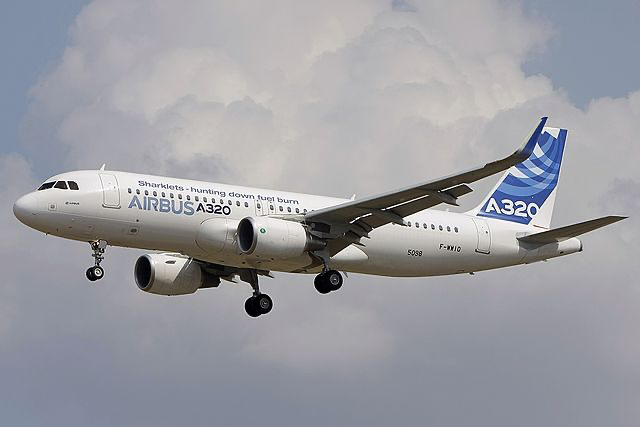
Airbus fills the gap: A321neo, LR and XLR.
With Boeing absent from the mid‑market, Airbus seized the opportunity by stretching its A320 family. The A321neo, introduced in 2017, offered similar seat counts to the 757 and a range of around 4,000 nautical miles. The A321LR added auxiliary fuel tanks, increasing range to roughly 4,000 nm; this model quickly became a popular replacement for shorter 757 routes.
The most ambitious variant, the A321XLR, went even further. Airbus strengthened the airframe, revised the flaps and integrated a large rear‑centre fuel tank; with an optional auxiliary tank, it can fly up to about 4,700 nautical miles (8,700 km). Because it shares systems and training with the A320 family, airlines can incorporate it at relatively low cost and enjoy roughly 30% lower fuel burn per seat. More than 500 A321XLRs were ordered before its November 2024 entry into service, with carriers including American Airlines, United Airlines, Icelandair, Aer Lingus, Iberia, LATAM and Qantas.
United Airlines, which operates 40 757‑200s and 21 757‑300s, announced orders for 50 A321XLRs with deliveries beginning in 2026. United plans to deploy the XLR across virtually all existing 757 routes, leveraging its longer range and improved fuel efficiency to serve smaller European cities that would not justify wide‑body service. Icelandair signed a provisional deal in 2023 for 13 A321XLRs to replace its 757 fleet, with deliveries scheduled to begin in 2029. Even Delta, long a champion of the 757, has ordered more than 70 A321neos and plans to retire its oldest 757‑200s as new aircraft arrive.
However, the A321XLR does not fully replicate the 757’s capabilities. Its lower maximum take-off weight restricts payload on extended routes, and some airlines express concerns regarding passenger comfort on narrow-body flights of up to nine hours. Despite these limitations, Airbus’s success in this market segment highlights Boeing’s withdrawal from the niche.
Boeing’s partial solutions: 737 MAX 10 and the elusive 797
In lieu of a true 757 successor, Boeing has pushed the 737 MAX 10, the largest variant of its narrow‑body family. The MAX 10 seats around 188–204 passengers and uses a stretched fuselage and new landing gear. Boeing claims it offers lower per‑seat costs than the A321neo. However, its range is roughly 3,300–3,400 nautical miles, and it cannot match the 757’s long‑haul mission or hot‑and‑high performance. Certification delays have pushed the MAX 10’s entry into service to the late 2020s.
Boeing’s proposed New Midsize Aeroplane (NMA) or 797 aims to fill the gap between the 737 and the 787. Concepts from the 2010s envisioned two models: a 225‑seat aircraft with a 5,000‑nm range and a 275‑seat version with a 4,500‑nm range. After years of study, the programme remains on hold due to financial constraints, shifting market dynamics and the need for new engine technology. Industry observers do not expect the 797 to launch before the 2030s.
Future concepts: blended‑wing bodies and sustainable designs
In addition to conventional tube-and-wing designs, aerospace startups and NASA are investigating blended-wing-body (BWB) configurations that may transform the mid-market segment. JetZero’s Z4, for instance, is a BWB concept designed to seat approximately 250 passengers, with a range of about 5,000 nautical miles and the potential for up to 50% lower fuel consumption per passenger mile. United Airlines invested in JetZero in April 2025 and holds options for up to 200 aircraft. A demonstrator is scheduled to fly in 2027, with commercial entry anticipated in 2030. Although BWB aircraft could eventually serve long-thin routes, they remain experimental and are not yet close to mass production.
Case studies: how airlines are phasing out the 757
United Airlines
United uses its 757s on transatlantic and U.S. domestic routes where the aircraft’s range and thrust are crucial. The airline’s 757‑200s can fly up to 3,415 nautical miles on routes like Newark–Stockholm. With the arrival of A321XLRs from 2026, United plans to retire its 757 fleet by around 2026, deploying XLRs on most long‑thin routes and 737 MAX 9/10 on shorter missions.
Delta Air Lines
Delta operates the largest 757 fleet, with 71 active 757‑200s and 15 active 757‑300s in December 2025. The airline’s long‑term replacement strategy centres on the Airbus A321; Delta already operates more than 200 A321ceo/neo aircraft and has another 70 on order. Because its 757s are paid off and share a type rating with the 767, Delta continues to fly them profitably. The carrier plans to gradually retire older 757‑200s as A321neos arrive and keep the 757‑300s in service until at least 2032.
Icelandair
Icelandair’s transatlantic network is built around the 757, but the airline announced in 2023 that it would lease four A321LRs from 2025 and order 13 A321XLRs for delivery from 2029. Once those deliveries begin, the airline will operate a mixed Airbus–Boeing fleet, signalling the end of its 757 era.
Cargo and freighter conversions
The 757 remains popular in the cargo market because it can carry 66,000–77,000 lb (30,000–35,000 kg) of freight and fit into medium‑size airports. Many passenger 757s are being converted to freighters, extending their service life by decades. Until a new mid‑market jet arrives, the cargo market is likely to keep the 757 flying.
Why is there still no true replacement in 2026
As of February 2026, no manufacturer provides an aircraft that fully replicates the Boeing 757’s combination of payload, range, and performance. Boeing does not have an active program to replace the 757. Airlines instead rely on a mix of Airbus A321neo/LR/XLR and Boeing 737 MAX 9/10 models to address this market segment. While these aircraft offer superior fuel efficiency and lower per-seat costs, they do not match the 757’s high thrust and cargo capacity. Prospective solutions such as the 797 or JetZero Z4 represent potential future options, but they remain years from entry into service and face uncertain market demand.
Conclusion: the 757 remains irreplaceable—for now
The Boeing 757’s unique capabilities arose from a combination of high thrust, long range and robust construction that addressed a specific market. When its production ended, Boeing dismantled the line and redirected resources to other programmes. New safety standards, lack of suitable engines and weak demand discouraged a successor. While Airbus’s A321neo/LR/XLR family now dominates “long‑thin” routes and the 737 MAX 10 serves shorter missions, these aircraft cannot entirely replicate the 757’s performance. Future projects like the NMA/797 and JetZero’s Z4 could eventually fill the void, but they are still in development.
The continued operation of the 757 demonstrates how a well-designed aircraft can remain essential long after production ceases. As airlines retire their fleets and the final passenger 757s exit service in the coming decade, the aircraft’s legacy will persist through freighter conversions and the influence of its design on future mid-market jets.